
Code of Ethics
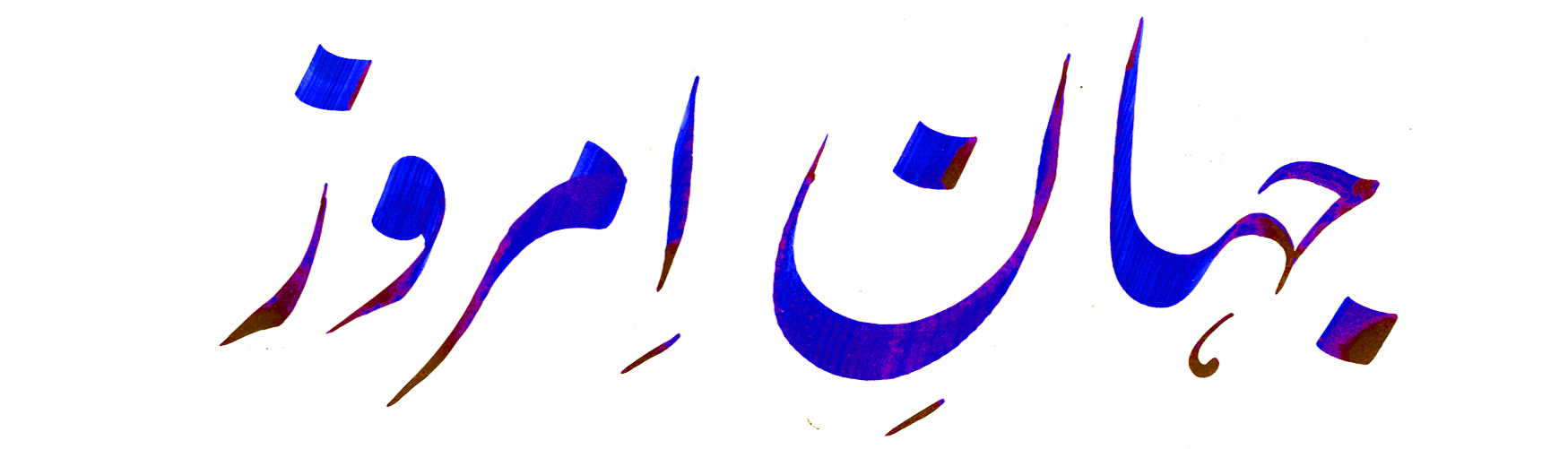
# Daily Jahan-e-Imroz Quetta
## Code of Ethics
*Daily Jahan-e-Imroz Quetta* considers journalism a public responsibility to provide accurate, reliable, balanced, and responsible information to the public.
This Code of Ethics establishes professional standards for all journalists, editors, reporters, photographers, video journalists, desk staff, digital media personnel, and other editorial employees associated with the organization.
This Code applies to all editorial content published through the *print newspaper, official website, social media accounts, and other digital platforms* of Daily Jahan-e-Imroz Quetta.
—
## 1. Truth and Accuracy
The primary responsibility of every journalist is to provide accurate information.
* Information should be appropriately verified before publication.
* Names, titles, locations, dates, figures, quotations, and other important details must be checked for accuracy.
* Rumors, speculation, or unverified claims must not be presented as established facts.
* Errors identified after publication should be corrected promptly and transparently.
* Knowingly publishing false or misleading information is unacceptable.
—
## 2. News and Personal Opinion
Journalists must maintain a clear distinction between factual reporting and personal opinion.
* News reports should primarily present verifiable facts.
* Personal political, religious, commercial, or social opinions must not be presented as factual reporting.
* Columns, analyses, commentaries, and opinion articles should be clearly identified as such.
* Editorial content must not mislead readers about whether material represents reporting or opinion.
—
## 3. Impartiality and Balance
Journalists should approach reporting with fairness and professional independence.
* Reasonable efforts should be made to obtain relevant perspectives from the parties involved in a disputed matter.
* Controversial issues should be reported with appropriate context.
* No political party, candidate, government institution, organization, or interest group should receive preferential treatment through editorial reporting.
* Allegations and claims should be attributed to their sources where appropriate.
—
## 4. Public Interest
Journalism should serve the public interest by providing information that is relevant, meaningful, and useful to society.
Areas of public interest may include:
* Education
* Health
* Public safety
* Public services
* Economy and employment
* Governance
* Law and justice
* Human rights
* Environment
* Social issues
* Issues concerning Balochistan and Pakistan
* Significant national and international developments
—
## 5. Protection of Sources
The organization recognizes the professional importance of protecting legitimate confidential sources.
* The identity of a confidential source should not be disclosed without a compelling reason or appropriate authorization.
* Journalists should take reasonable measures to protect sensitive source information.
* Anonymous sources should be used responsibly and only when the information is sufficiently important and cannot reasonably be obtained through attributable sources.
* Fabricated, fictitious, or knowingly false sources are strictly prohibited.
—
## 6. Bribery, Financial Benefits, and Improper Advantages
Journalists and editorial employees must not accept improper financial or personal benefits in exchange for coverage.
Journalists must not:
* Accept money in exchange for publishing a story.
* Accept money in exchange for suppressing or withholding a story.
* Demand or accept payment for favorable coverage.
* Use their journalistic position for personal financial gain.
* Accept gifts or benefits that could reasonably compromise editorial independence.
Any significant gift or benefit that could create a conflict of interest should be disclosed to the appropriate editorial authority.
—
## 7. Political Activity and Editorial Responsibility
Journalists may hold personal views, but professional reporting must remain independent and evidence-based.
* The organization’s editorial platforms must not be used as personal political campaigning tools.
* Political and electoral reporting should be based on verifiable information.
* Claims made by political parties, candidates, public officials, or political groups should be appropriately attributed and, where necessary, independently verified.
* Personal political preferences must not determine the factual treatment of a news report.
—
## 8. Conflicts of Interest
Journalists must avoid situations in which personal, financial, family, political, or business interests could compromise—or reasonably appear to compromise—their professional independence.
Journalists should disclose relevant conflicts to their editor.
Where necessary, editorial management may assign the story to another journalist.
—
## 9. Reporting on Crime and Allegations
An allegation or accusation is not the same as a proven fact.
* Individuals should not be presented as guilty before a final judicial determination where applicable.
* Allegations must be clearly identified as allegations.
* The response or position of the person or organization concerned should be sought where reasonably possible.
* Court proceedings should be reported accurately and with appropriate legal and journalistic care.
—
## 10. Protection of Children and Minors
The safety, dignity, and privacy of children and minors must receive special consideration.
* A child’s identity should not be unnecessarily disclosed.
* In cases involving abuse, exploitation, or other sensitive circumstances, identifying information should be withheld where disclosure could cause harm.
* Particular care should be taken when interviewing, photographing, or recording children.
* Publication decisions involving minors should consider their best interests and safety.
—
## 11. Victims and Sensitive Events
Coverage of accidents, crimes, disasters, violence, and other sensitive events should respect human dignity.
* Unnecessary sensationalism should be avoided.
* The privacy of victims and their families should be respected.
* Graphic or distressing images should not be published merely to attract attention.
* Sensitive material should be used only where there is a legitimate journalistic and public-interest justification.
—
## 12. Hate Speech and Discrimination
Journalists must not promote hatred, violence, or discrimination against individuals or groups on the basis of religion, sect, ethnicity, nationality, language, gender, disability, region, or other identity.
Where offensive or hateful statements are newsworthy, they should be reported with appropriate context and attribution rather than amplified unnecessarily.
—
## 13. Photographs and Videos
Photographs and videos are editorial content and must meet appropriate standards of accuracy and authenticity.
* Old photographs must not be presented in a misleading manner as current images.
* Images must not be manipulated in a way that materially changes the meaning or reality of an event.
* Photographs and videos obtained from social media should be appropriately verified before publication.
* Artificially generated or manipulated material must not be presented as authentic.
—
## 14. Social Media Policy
Journalists and editorial staff should maintain professional standards when using social media, particularly when identifying themselves as representatives of Daily Jahan-e-Imroz Quetta.
* Unverified information should not be presented as confirmed news.
* Misleading headlines, captions, or clickbait should be avoided.
* Personal posts should not be presented as official statements of the organization.
* Confidential sources and sensitive editorial information must not be disclosed without authorization.
* Official social media accounts must follow the same standards of accuracy and accountability as the newspaper and website.
—
## 15. Breaking News
Speed must not come at the expense of accuracy.
* Preliminary information should be identified as preliminary when appropriate.
* Unverified casualty figures, arrests, damage estimates, or other significant claims should not be presented as confirmed facts.
* Breaking stories should be updated as reliable information becomes available.
* Significant errors in breaking news should be corrected promptly and transparently.
—
## 16. Artificial Intelligence (AI)
Artificial intelligence may be used as an editorial assistance tool where appropriate, but final editorial responsibility remains with human journalists and editors.
* AI-generated information must be independently checked before publication.
* AI-generated text must not be published as verified journalism without appropriate human review.
* Deepfakes, synthetic images, manipulated audio, and fabricated videos must not be presented as authentic.
* Confidential, personal, or sensitive information must not be entered into unauthorized AI systems.
* AI does not replace journalistic judgment, verification, fact-checking, or editorial accountability.
—
## 17. Plagiarism and Intellectual Property
The work of other journalists, newspapers, websites, photographers, writers, or organizations must not be presented as original work without appropriate attribution or permission.
* Copying and publishing material without proper attribution is prohibited.
* Information obtained from other sources should be appropriately attributed where required.
* Copyright and intellectual-property rights relating to photographs, videos, graphics, articles, and other creative works must be respected.
—
## 18. Advertising and Editorial Content
Advertising and editorial content must remain clearly distinguishable.
* Paid content must not be presented as independent editorial reporting.
* Sponsored content should be appropriately identified.
* Advertisers must not be permitted to improperly control factual editorial reporting.
* Financial considerations must not determine the factual content or accuracy of news coverage.
—
## 19. Reporting on Government and Law-Enforcement Agencies
Journalists should maintain professional relationships with government institutions, police, administration, courts, and other public authorities.
Information provided by a government official or law-enforcement agency should not automatically be treated as independently established fact solely because of the official’s position.
Important claims should be independently verified where reasonably possible.
—
## 20. Treatment of the Public
Journalists must treat members of the public with professionalism, fairness, and respect.
* Interview subjects should not be deliberately deceived except in exceptional circumstances where there is a compelling public-interest justification and appropriate editorial authorization.
* People should not be subjected to unnecessary pressure when providing interviews or information.
* Particular sensitivity should be exercised when dealing with victims, children, grieving families, and vulnerable individuals.
—
## 21. Corrections and Right of Reply
Accuracy includes correcting mistakes.
Where an error is identified:
1. The error should be reviewed promptly.
2. Correct information should be provided.
3. A correction or clarification should be published where appropriate.
4. Significant errors should be corrected in a clear and transparent manner.
Individuals or organizations that are materially affected by inaccurate reporting may request clarification or correction. Such requests should be reviewed fairly and in accordance with editorial standards.
—
## 22. Headlines, Thumbnails, and Captions
Headlines, thumbnails, captions, and social media descriptions must accurately represent the underlying story.
* Misleading headlines must not be used solely to increase clicks or engagement.
* Headlines must not make claims that are unsupported by the article.
* Images and thumbnails must not be selected in a way that creates a materially false impression of the story.
—
## 23. Privacy and Personal Information
Journalists should exercise care when collecting, publishing, or sharing personal information.
Unnecessary disclosure of the following should generally be avoided:
* Personal telephone numbers
* Private residential addresses
* Private documents
* Sensitive identification information
* Personal information whose publication could cause unnecessary harm
Publication of private information should be based on a legitimate journalistic purpose and, where relevant, public interest.
—
## 24. Editorial Records and Documentation
Where appropriate, journalists and editors should maintain relevant records supporting significant stories, including:
* Official documents
* Statements
* Interview notes
* Photographs
* Videos
* Relevant correspondence
* Source information
Such records should be handled securely and retained according to the organization’s editorial and legal requirements.
—
## 25. Editorial Pressure and Independence
Journalists should report inappropriate attempts to influence, suppress, alter, or manipulate editorial content to their senior editor or appropriate editorial authority.
The organization is committed to maintaining a professional editorial environment in which journalistic decisions are based on evidence, public interest, and professional standards rather than improper financial, political, or personal pressure.
—
# Our Professional Commitment
Every journalist and editorial employee associated with *Daily Jahan-e-Imroz Quetta* is expected to uphold the following principles:
> *We are committed to accuracy, integrity, responsible journalism, protection of legitimate sources, respect for human dignity, accountability, and service to the public interest.*
—
# Core Editorial Values
*Accuracy — Integrity — Independence — Fairness — Public Interest — Transparency — Accountability — Human Dignity — Privacy — Professionalism*
—
## Application of this Code
This Code of Ethics applies to the editorial operations of:
*Daily Jahan-e-Imroz Quetta*
including:
* Print Newspaper
* Official Website
* Digital News Platforms
* Facebook
* Instagram
* WhatsApp
* TikTok
* X (Twitter)
* YouTube
* Other official digital and social media channels
The organization may periodically review and update this Code to reflect developments in journalism, digital media, technology, law, and internationally recognized professional standards.
*Organization:* Daily Jahan-e-Imroz Quetta
*Document:* Code of Ethics
*Scope:* Print, Web, Digital and Social Media
*Responsible Editorial Authority:* Editor / Chief Editor